Guide · For studios
Managing a Pottery Class: Less Admin, Better for Everyone Involved
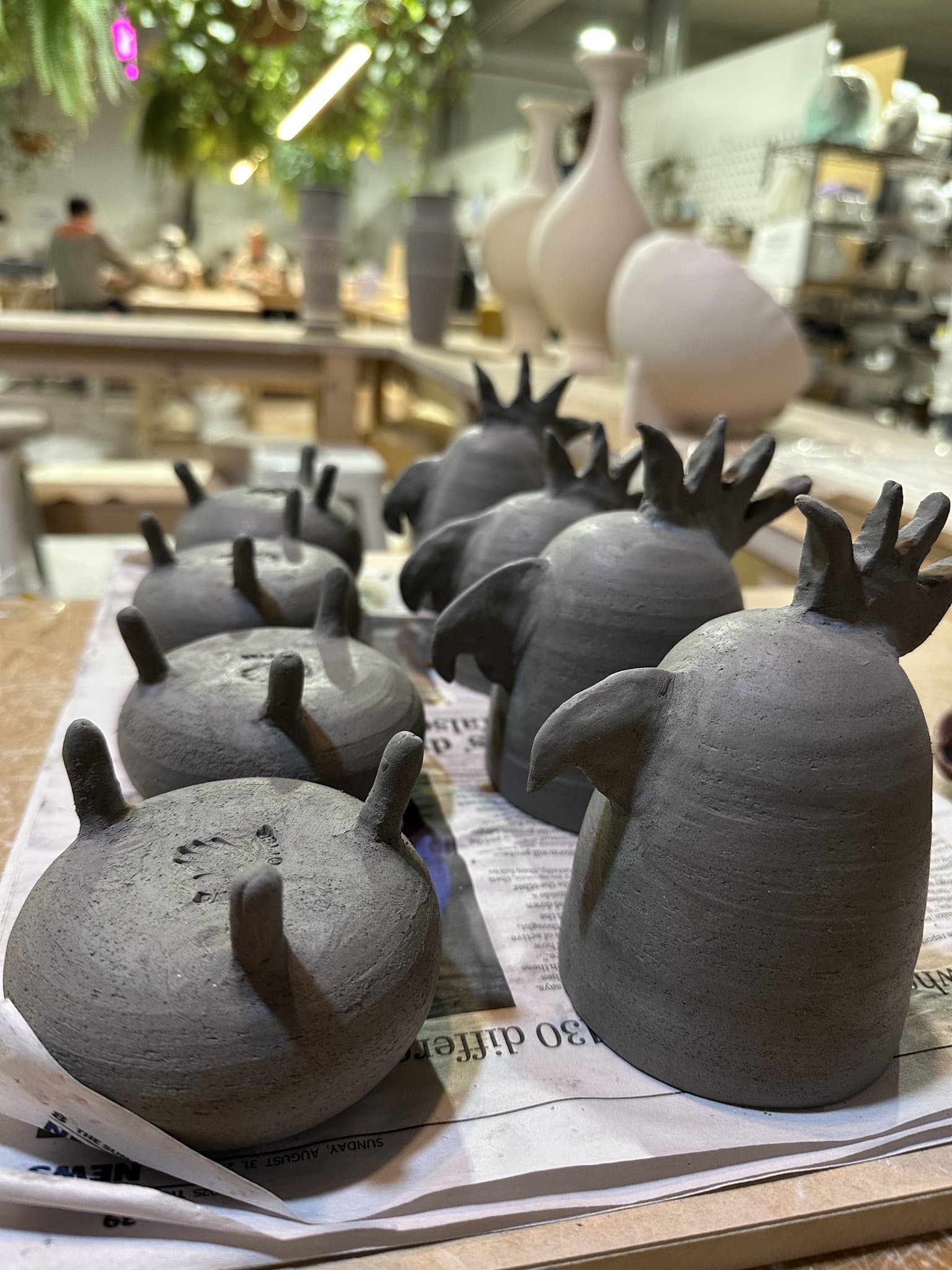
A pottery class makes a lot of pieces. Thirty students over a six-week course turn out bowls and mugs that all have to be dried, bisqued, glazed, fired and handed back to the right person, and that part carries on for weeks after each session. Getting a single piece from wet clay to the collection shelf involves the student who made it, the teacher, the kiln tech who fires it, and the manager keeping an eye on the studio. When none of them can see where a piece is, they all end up asking each other. Getting a class organised helps all four, and here's how it plays out for each.
The way most classes run
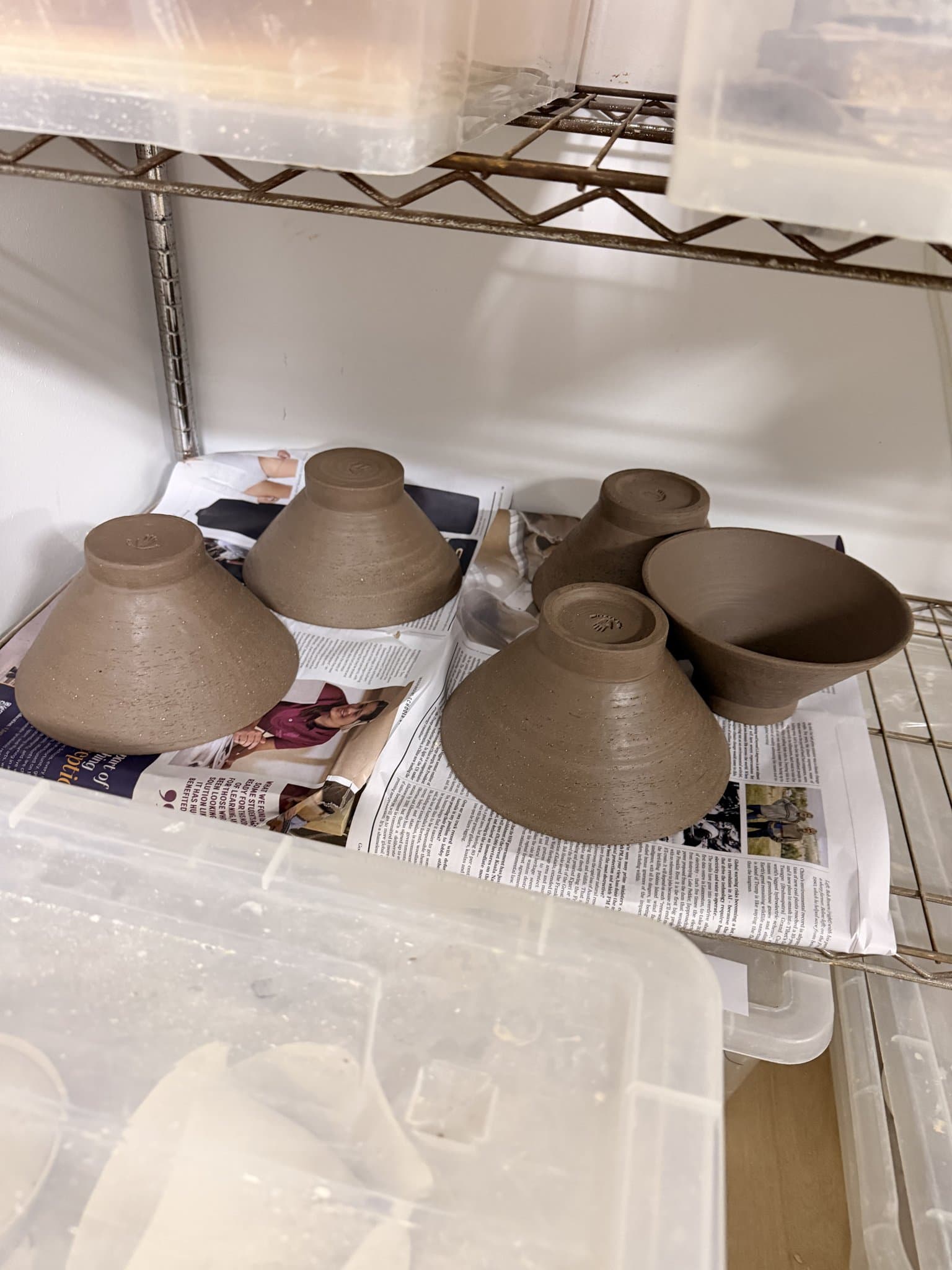
Most studios keep a class together with bits of paper and a spreadsheet, maybe a whiteboard and a shelf system on top. That's fine when it's quiet. But most studios run several classes a week, often overlapping, plus the odd workshop and a members' cohort, so at any point there's beginners' work from Tuesday, a wheel course from Thursday and last week's date night all sharing the same shelves and kilns. The more work there is in the building, the more there is to keep track of, and the more that goes wrong when someone's away. Getting on top of it comes down to everyone being able to see where things are, instead of it living on scattered paper and in a few people's heads.
Better for the student
Most of a student's frustration comes down to not knowing. They made a bowl three weeks ago and can't tell whether it's been fired, whether it survived, or when they can take it home, so they email, or turn up on the wrong week, or assume it got lost. If they can see their own work move through drying, bisque, glaze and firing, and get a message when it's ready to collect, most of that goes away. They come in at the right time, and even someone who only booked a single class knows when to pick their piece up, without having to make an account to find out.
Less on the teacher
A lot of teachers just want to teach and head home, and they shouldn't have to double as the studio's record-keeper. What actually helps them is that the logging isn't their job, it's the students'. A student wants to know where their own work is, so they've got a reason to log their pieces themselves, and the record of the whole class builds up without the teacher entering anything. Students seeing their own work also means the "is it ready yet" questions stop coming to the teacher. They can just teach the class and leave.
Easier for the kiln tech
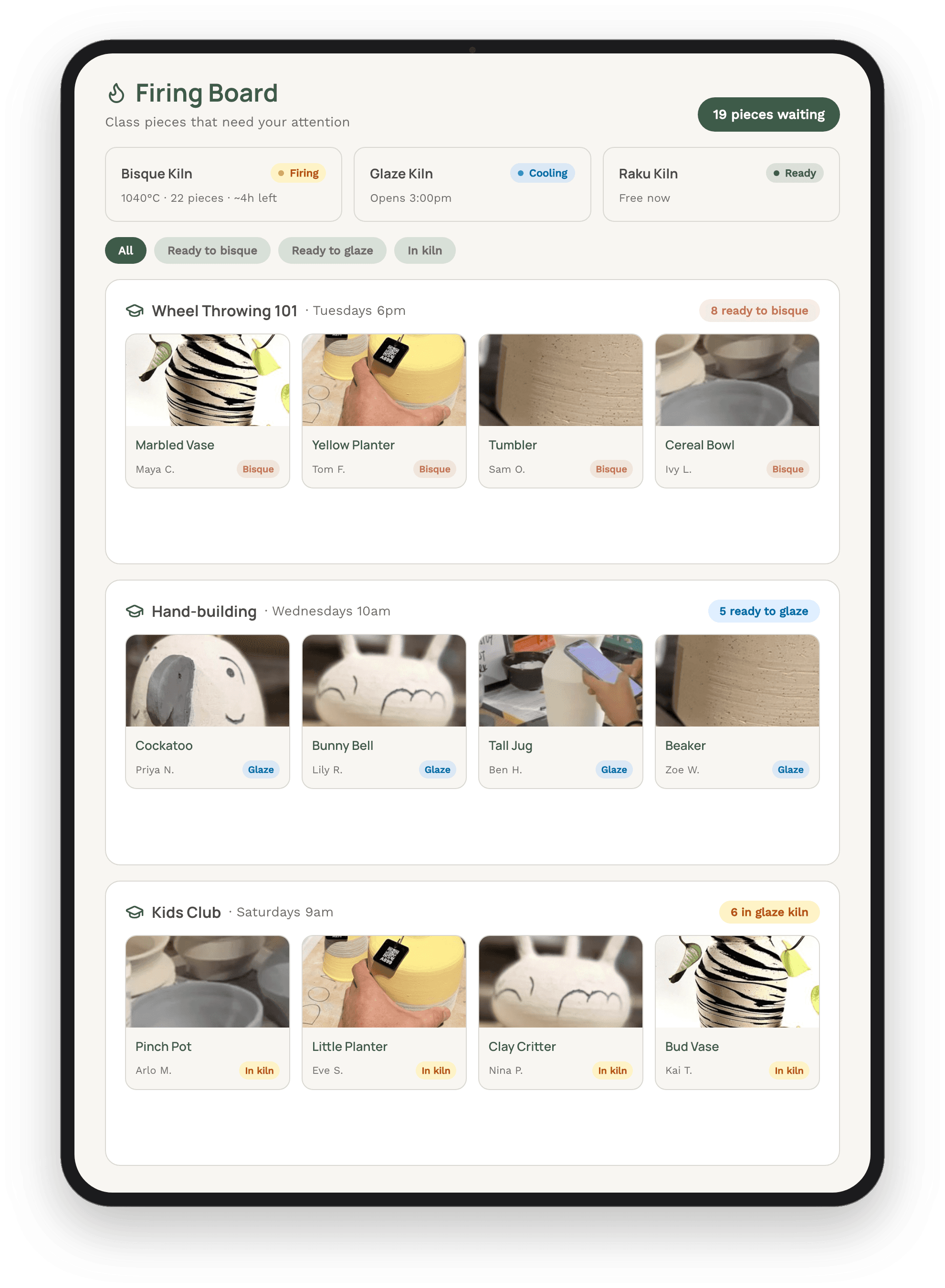
A kiln tech spends most of their time working out what to fire and when, and that's much easier with a clear view of what's coming. If they can see what's waiting, what's dry enough to bisque, and what's glazed and ready for the next load, they can fill kilns sensibly instead of reacting to whatever's in front of them. And if a piece is coming up against a deadline, like a class that finishes next week, they can see it and fire it in time, so nobody's work gets left behind at the end of their course.
Off the studio manager's plate
The person running the studio doesn't have to hold it all in their head either. Instead of being the one who has to know where everything is and whether it's on track, they can see the whole studio, every class and every stage, without asking anyone. Less slips through, because it isn't resting on one person's memory, and there's less to stay on top of day to day.
Getting set up
None of this takes a big rollout. Once a class's pieces are being tracked, everyone involved is working from the same information instead of chasing each other for it, and most studios have it running for their classes in the first session.
See how it'd work for your classes
If your classes are held together by a whiteboard and memory right now, it's worth seeing how tracking them changes things for everyone involved. We'll walk you through it with your own classes in mind.
Book a MudBuddy demoOr read more about MudBuddy for studios.
Frequently asked questions
What does pottery class management software actually do?
At its most useful, it keeps track of every student's work as it moves through the class, from wet clay to the collection shelf, so everyone involved can see where things are. Students can follow their own pieces and get told when they're ready, the logging is done by the students rather than the teacher, the kiln tech can plan firings, and the manager can see the whole studio without chasing anyone.
How do students know when their class work is ready to collect?
Each piece is tracked through firing, and its maker gets a message when it's done, so they come in when the work is actually ready rather than guessing or asking staff. It also keeps the collection shelf moving, because finished work gets picked up sooner.
Do one-off or beginner students need to create an account?
No. A student who's only in for a single class or a date night can still see their own piece and get told when it's ready without signing up for anything, which is really the only way something like this gets used by people who came once.
How does class tracking help the kiln tech and manager, not just students?
The tech gets a clear view of what's waiting, what's ready to fire, and what's coming up against a deadline, so they can plan loads and prioritise instead of reacting. The manager gets a picture of the whole studio, every class and every stage, without having to hold it all in their head or ask around.